Ethiopian Wolf, Nose to the Wind

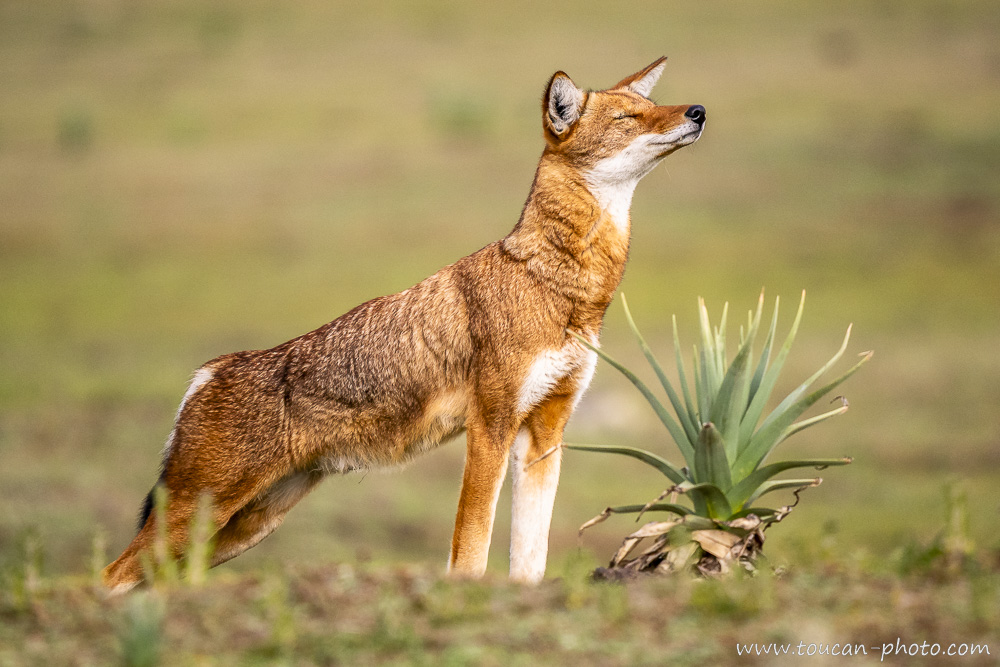
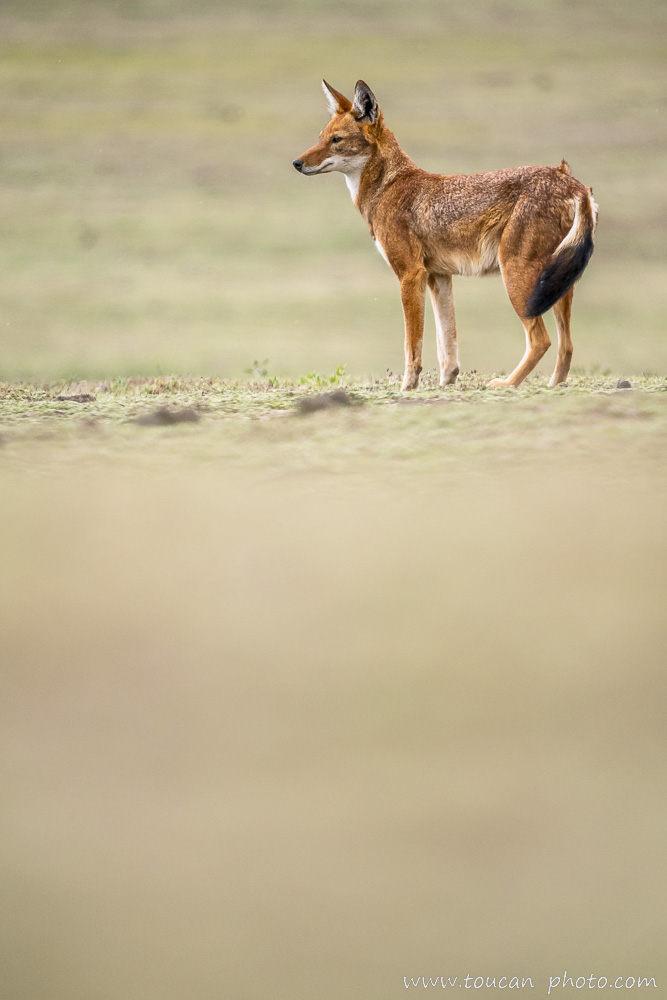
Ethiopian wolf (Canis simensis) catching a scent in the Bale Mountains, Ethiopia

Ethiopian wolf (Canis simensis) catching a scent – Bale Mountains, Ethiopia

The Ethiopian wolf (Canis simensis), also known as the Simien jackal, is the world’s rarest wild canid, endemic to the highlands of Ethiopia. A rodent-hunting specialist, it moves gracefully through alpine meadows.

In this image, an individual lifts its head into the morning breeze—perhaps tracking prey or simply attuned to the subtle cues of its environment. With fewer than 500 individuals remaining in the wild, every observation is a profound privilege. Its russet coat, slender muzzle, and poised silhouette make it a quiet but powerful symbol of Ethiopia’s unique natural heritage.

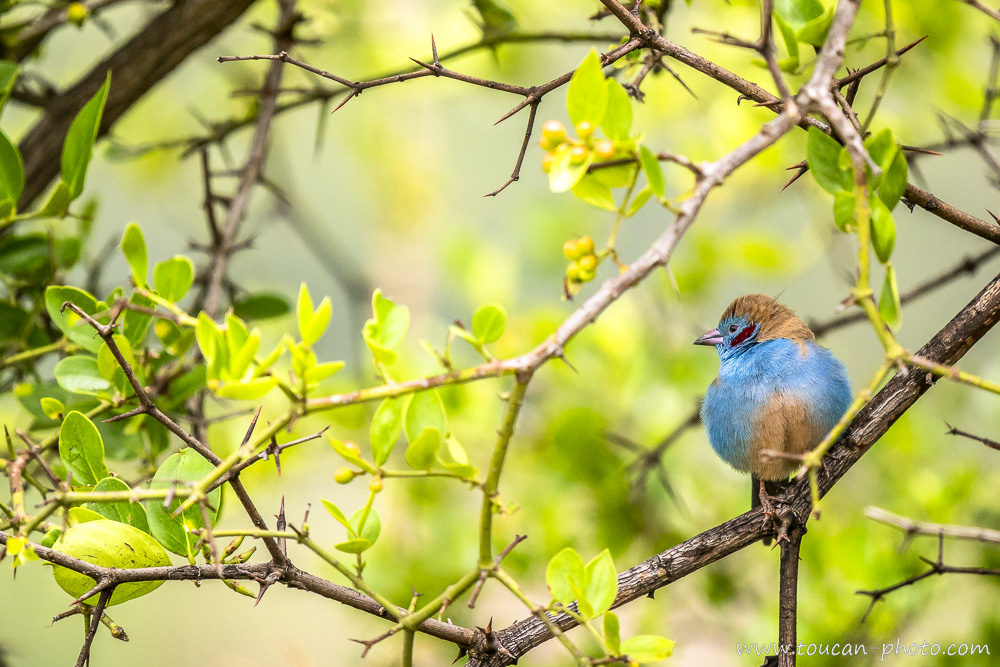
Blue Sparkle of the Male Red-cheeked Cordon-bleu (Uraeginthus bengalus)

Male Red-cheeked Cordon-bleu (Uraeginthus bengalus) perched in a thorny bush, Ethiopia

A bright turquoise flash amidst the thorny thickets of the Ethiopian savannah.

Perched in a thorny bush, this male Red-cheeked Cordon-bleu (Uraeginthus bengalus) reveals its stunning plumage.

Its vibrant turquoise-blue breast and belly are highlighted by a distinctive red patch on the cheek. In females, these colors are more muted, with the blue being less extensive and the red cheek patch absent. This contrast allows for easy identification of the sexes. Widespread across the savannahs and scrublands of sub-Saharan Africa, this small, graceful bird enlivens the Ethiopian landscape with its vivid colors and energetic movements, often found in pairs or small groups.

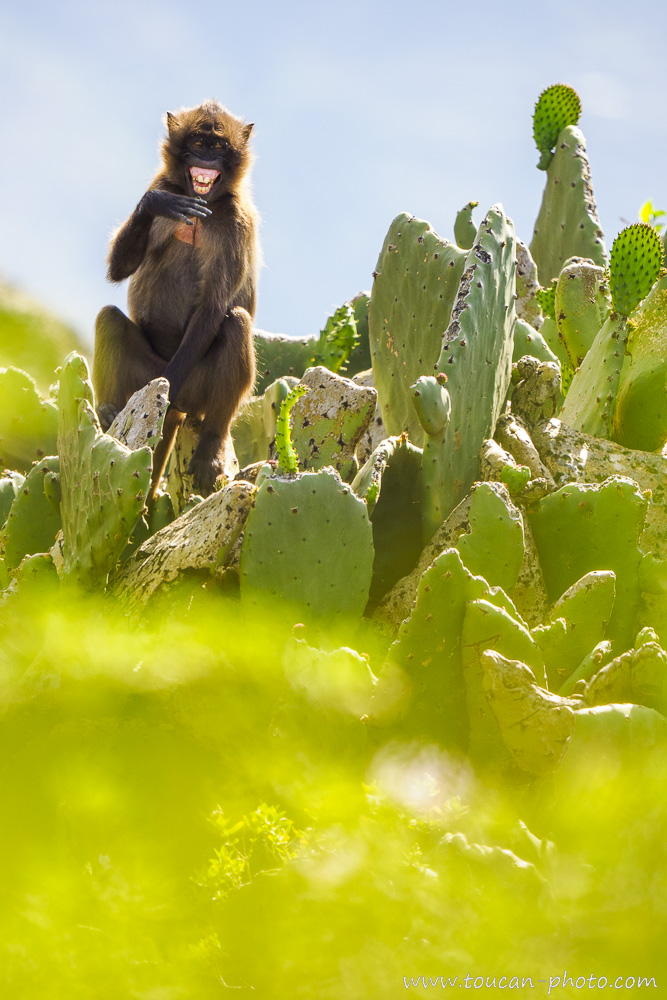
Young Gelada female on a Cactus

Young female Gelada (Theropithecus gelada) perched on a cactus, Ethiopia

A unique specialization among primates to survive in high-altitude grasslands.

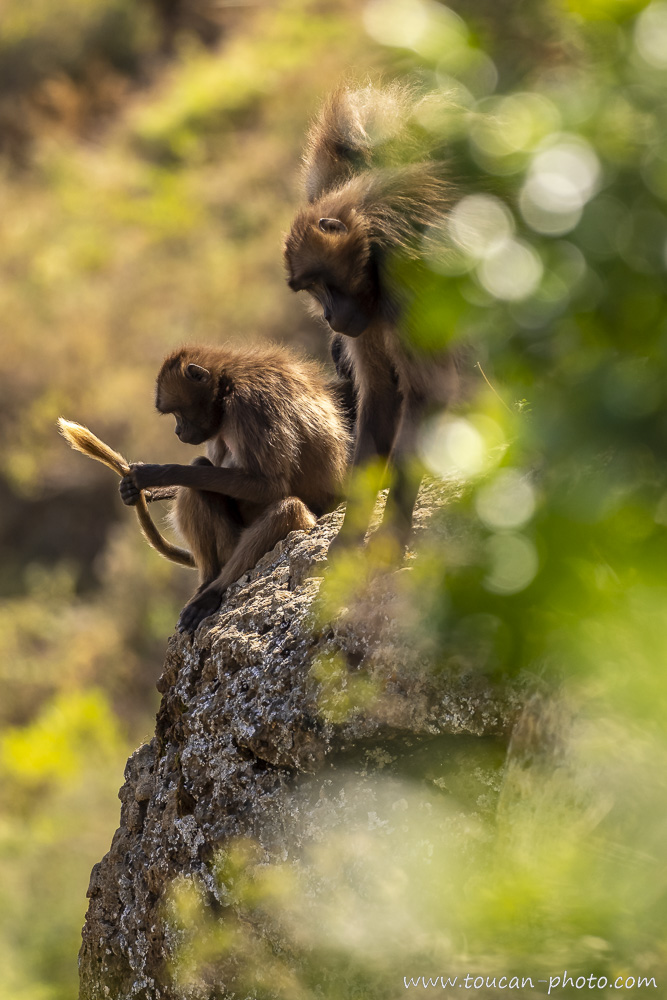
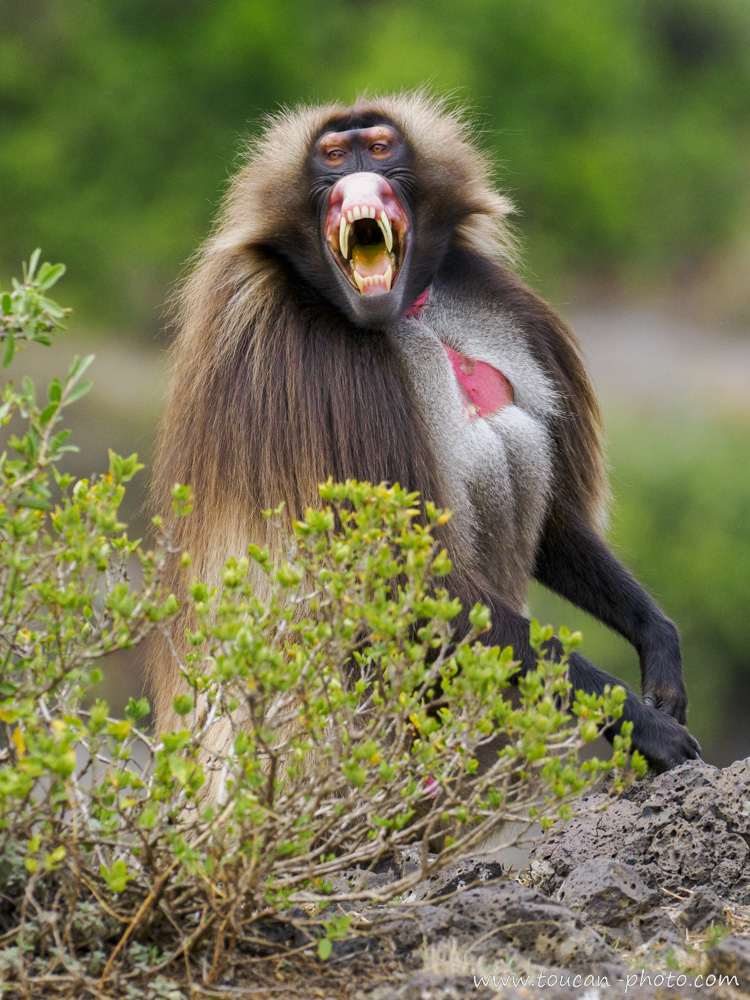
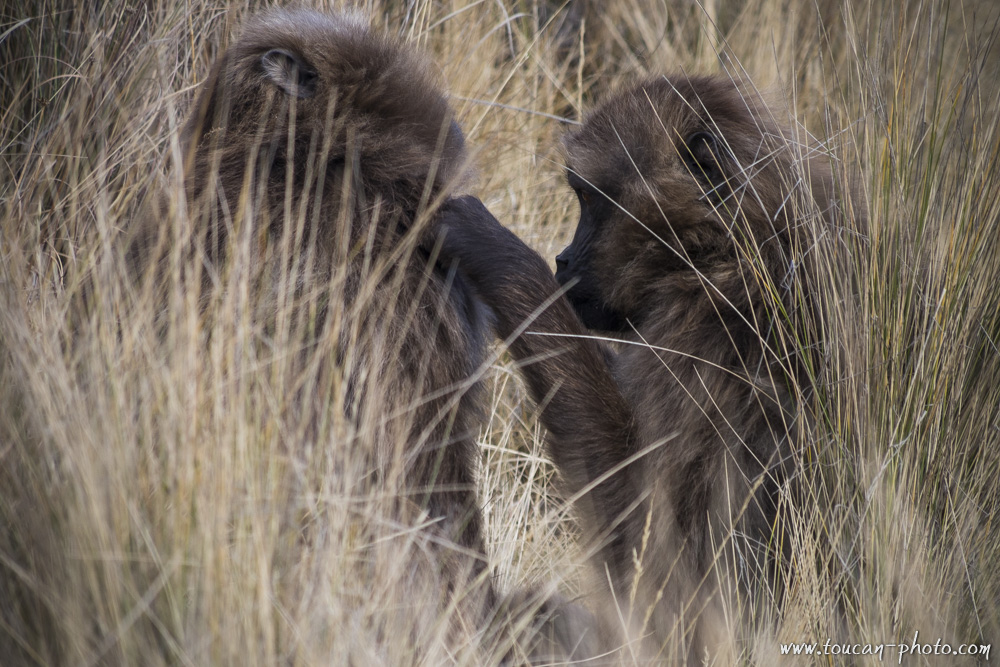
The Gelada, a primate endemic to the Ethiopian Highlands, is distinguished by an almost exclusively herbivorous diet.

Unlike most monkeys, it spends the majority of its day grazing on grass, much like a ruminant. Over 90% of its diet consists of shoots, seeds, roots, flowers… and even cacti, from which it consumes the tender, water-rich parts. This unique specialization allows it to thrive in altitude prairies where resources are seasonal but abundant. In this photograph, a young female nimbly explores the resources provided by the local flora, showcasing the species’ incredible adaptation.

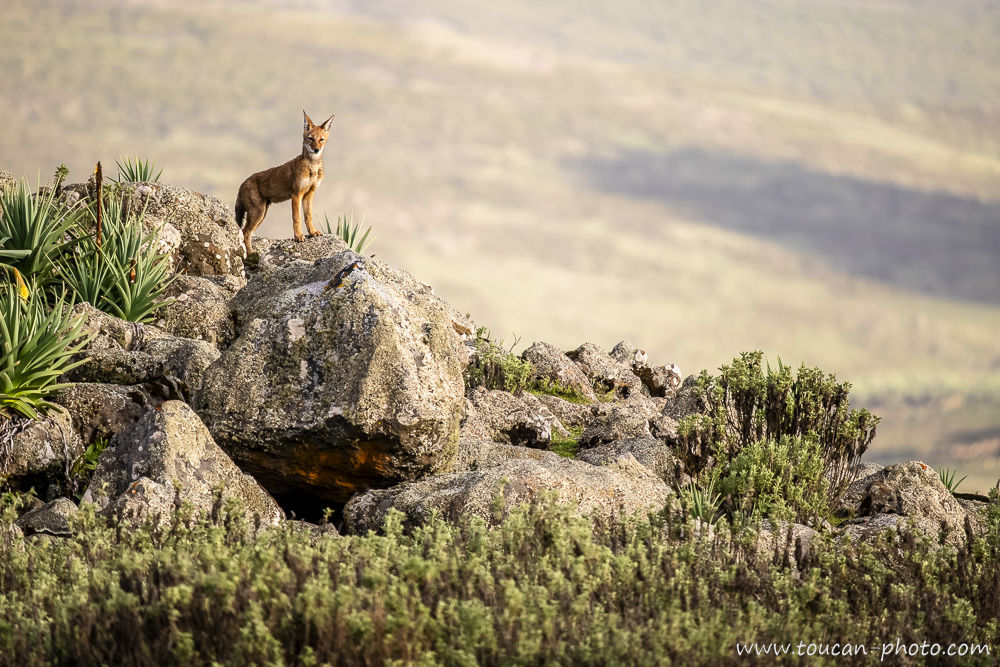
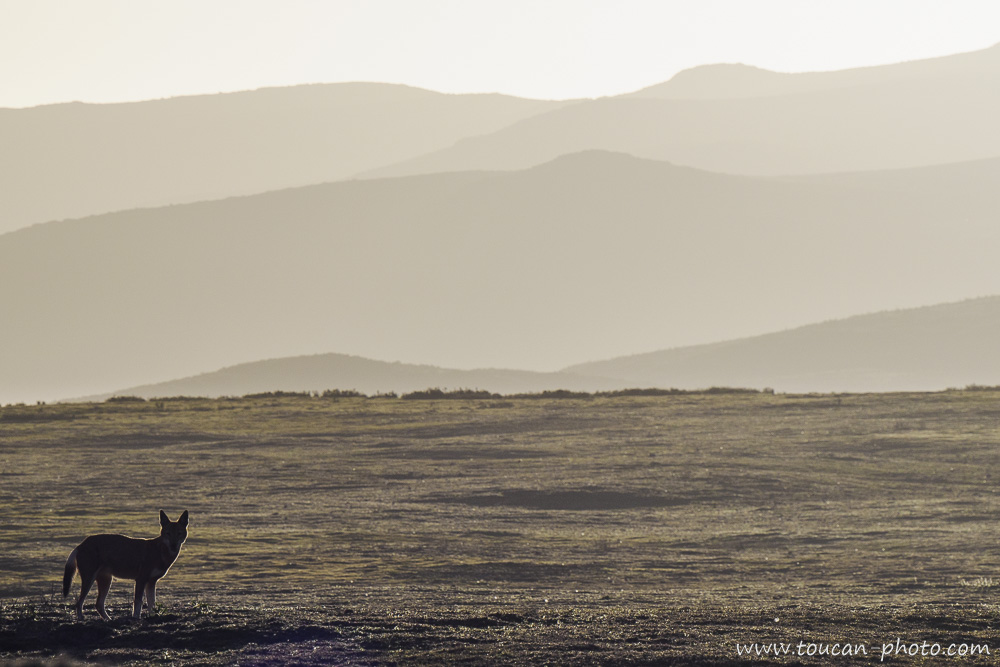
The Ethiopian Wolf, Sentinel of the Abyssinian Highlands

Ethiopian Wolf (Canis simensis) standing in the tall grass, Ethiopia

A silhouette that stands still, watchful, in the silence of the high plateaus.

At the edge of dawn, across the vast expanses of the Ethiopian highlands, the Ethiopian Wolf (Canis simensis) embodies elegance and discretion.

Its silent steps lead it through the high-altitude pastures, where it scans every movement in the grass, stalking its favorite prey—primarily endemic rodents. This image reveals the profound harmony between the animal and its environment: soft lines, diffused light, and a suspended silence. As a critically endangered species, this solitary predator of the Simien and Bale mountains is a symbol of the raw and fragile beauty of Abyssinia.

The Abyssinian Wolf, Watcher of the Ethiopian Highlands

The

The Abyssinian Wolf, Watcher of the Ethiopian Highlands


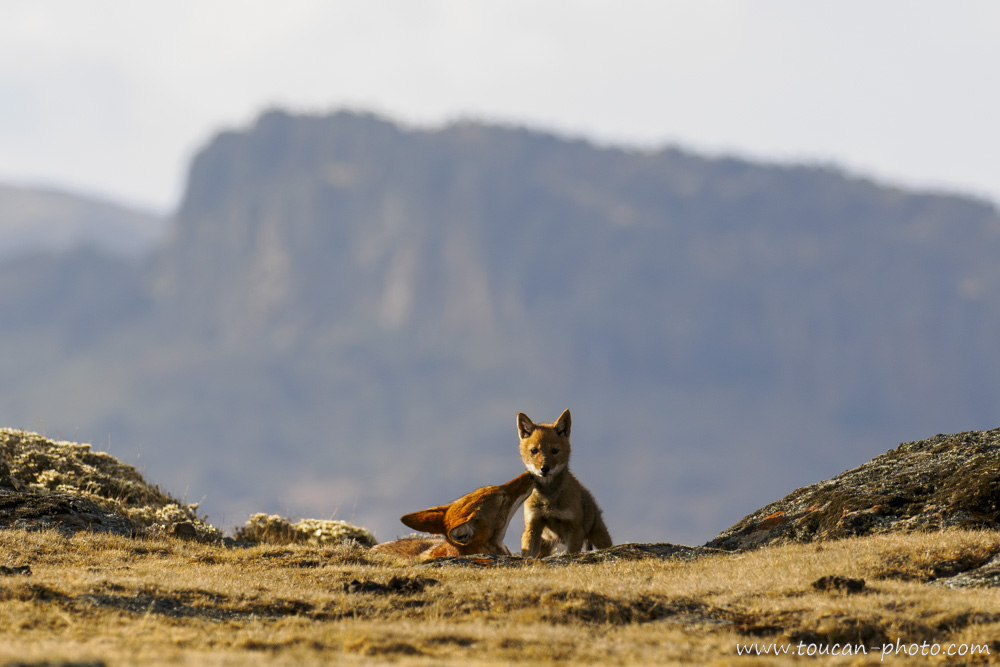
Alone on the highlands of Abyssinia, the Ethiopian wolf scans the horizon. This slender predator, perfectly adapted to life at high altitude, is now one of the most endangered mammals on the African continent. Threatened by habitat fragmentation and diseases transmitted by domestic dogs, only about 500 individuals remain in the wild.

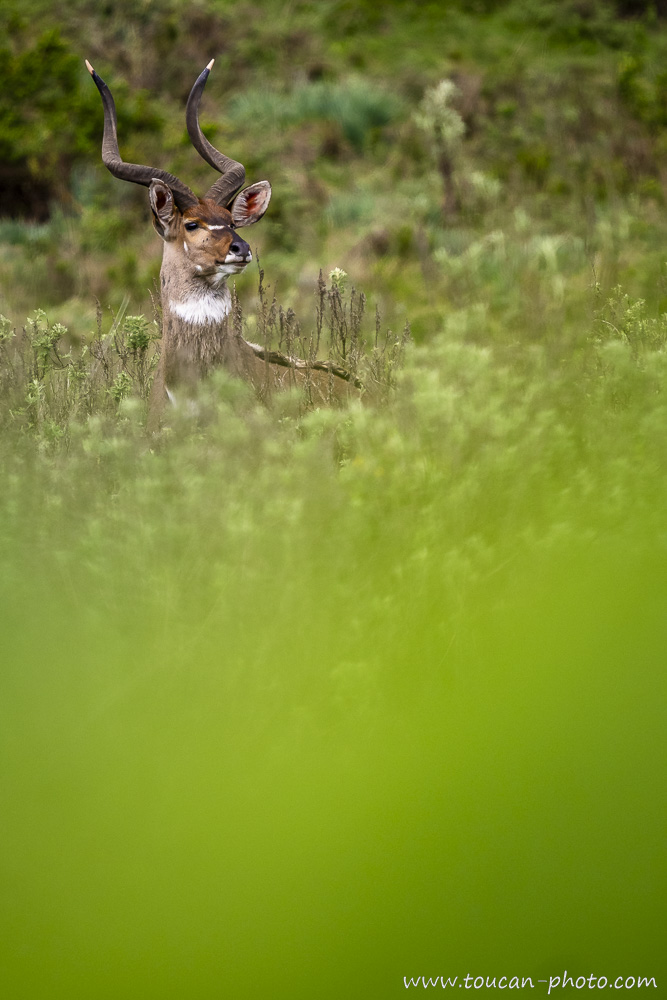
Male Mountain Nyala (Tragelaphus buxtoni) – Bale Mountains, Ethiopia

Male

Male Mountain Nyala (Tragelaphus buxtoni) – Bale Mountains, Ethiopia


Shy and elusive, the mountain nyala lives only on the Ethiopian highlands, among misty heather forests, alpine meadows, and shadowy clearings. Fewer than 4,000 individuals remain in the wild, most of them confined to the Bale Mountains — the species’ last stronghold.

Males are especially striking: larger and darker than females, they bear long, spiraled horns and a dark crest along their back that stands erect during tension or display. These features make them elegant, ghost-like figures of the high-altitude forests — rare, silent, and hard to glimpse.

Pack of Abyssinian Wolves on Patrol in the Bale Mountains (Canis simensis), Ethiopia


Pack of Abyssinian Wolves on Patrol in the Bale Mountains (Canis simensis), Ethiopia

Pack of Abyssinian Wolves on Patrol in the Bale Mountains (Canis simensis), Ethiopia


👁️ Click to see the 360° virtual tour

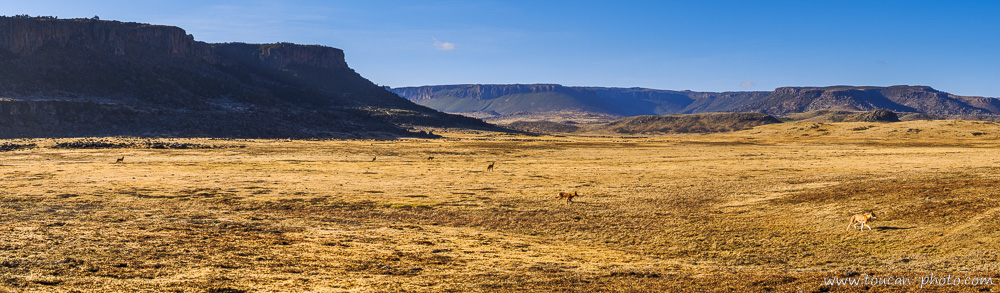
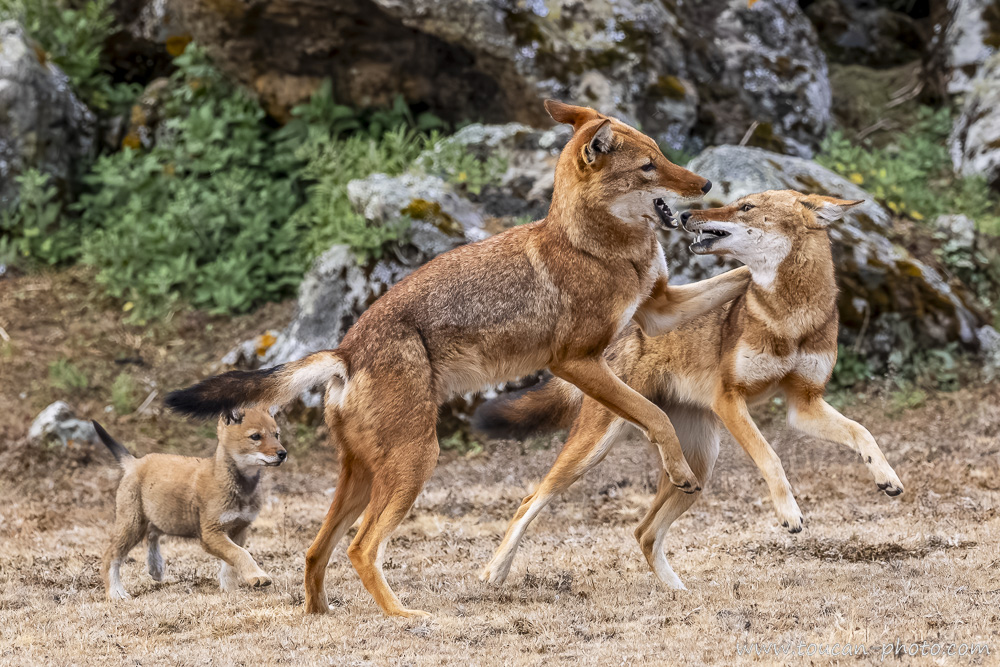
Abyssinian wolves feed almost exclusively on rodents. Their habitat is limited to the high plateaus and mountains of Ethiopia, where rodent density is particularly high. In the Bale Mountains, where this photo was taken, up to 6,000 rodents can be found per square kilometer.

This diet has shaped their behavior: unlike other wolf species that hunt large prey in packs, Abyssinian wolves hunt alone.
Yet each morning, before spreading out to search for food, clan members carry out a joint patrol across their territory.

On this particular day, six wolves from the Meguiti clan were roaming their land, ensuring no intruders had trespassed.

Ethiopia: The salt from lake Karum


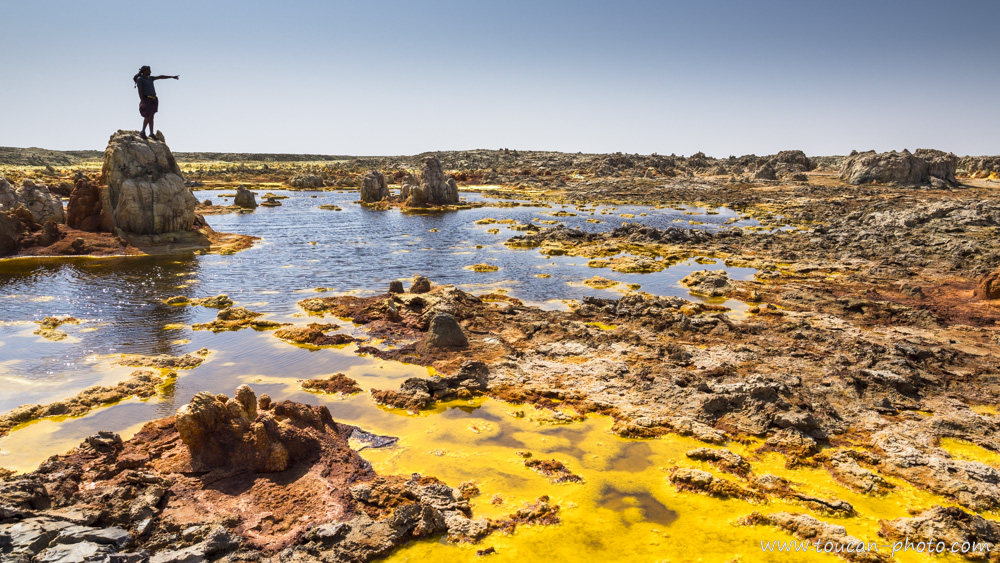
Lake Karum is a salt lake located in Ethiopia, at the northern end of the Great Rift Valley. This lake, as well as the volcanoes of Dallol and Erta Alé are among the most improbable landscapes of the Danakil depression. This place also offers a timeless spectacle. Indeed, perpetuating a centuries-old tradition, Tigrayans travel to Lake Karum from the Ethiopian highlands, followed by long caravans of dromedaries and donkeys in order to recover salt slabs from the dry areas of the lake, a vestige of a time when the sea still flooded the Danakil depression.

Continue reading“Ethiopia: The salt from lake Karum”

Ethiopia: The Erta Ale volcano and its lava lake


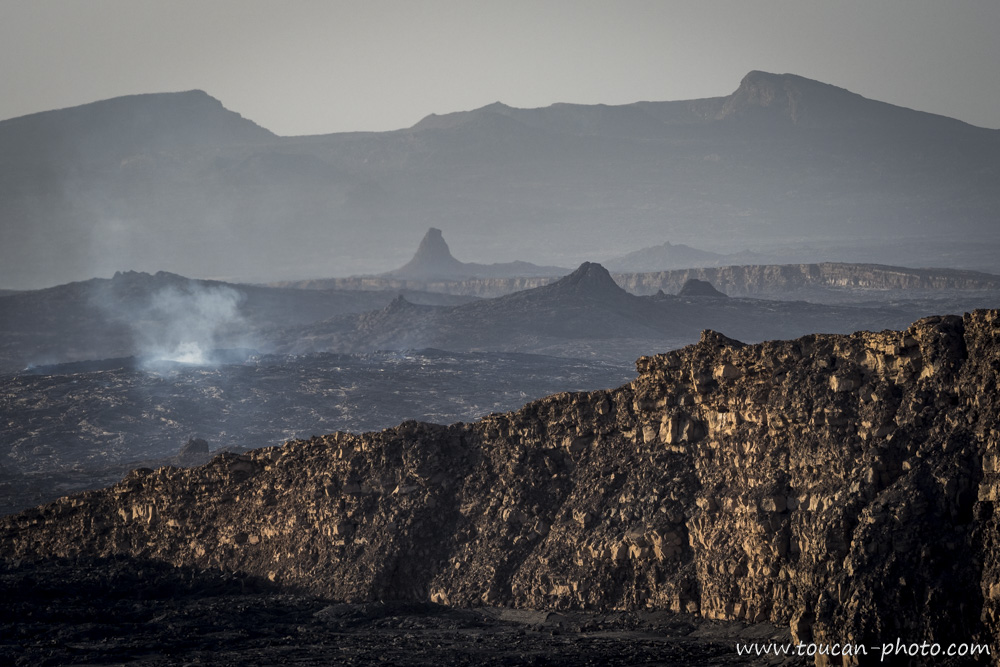
The Erta Ale is an Ethiopian volcano located in the Afar region, at the north east of the country, in the massif of the grand rift valley. The volcano has an altitude of 613 meters for 30 kilometers in diameter basis, which makes it called a “shield”.
We found, at the top of this very active volcano, a caldera that contains two craters. The Pit South crater, of 200 meters in diameter, is currently the most impressive as it contains a permanent lava lake, whose temperature of molten rocks reaches up to 1200 degrees Celsius. The level of the lake varies according to the weather. In January 2017, the lake was so high in the crater that the latter finally overflowed. In April 2017, the level of the lake has gone down offering its observers a great spectacle. Indeed, the surface of the lake was, in April, in perpetual movement and an impressive phenomenon of emptying and re-filling of the lake took place cyclically. This phenomenon can be seen in the video at the end of the article.

Continue reading“Ethiopia: The Erta Ale volcano and its lava lake”

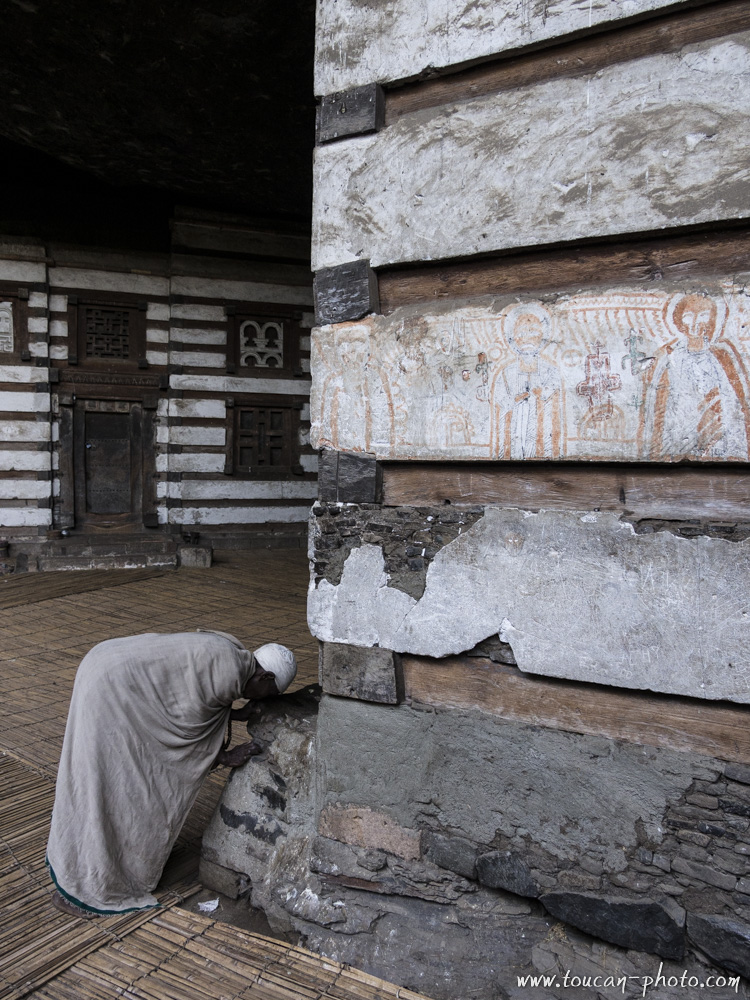
Yemrehana Krestos Church, Amhara area, Ethiopia
Yemrehana Krestos Church, Amhara area, Ethiopia

The Yemrehanna Krestos Church is an Ethipian Orthodox Church built inside a cave.
Located at the bottom of Abouna Yossef, a 4190m above sea level mountain.
The church naming is because of the king Yemrehanna Krestos who achieve to built the church during the 12th century

Ethiopia: The Simien Mountains

The Simien Mountains are located in the northern Ethiopian Highlands. Since 1978 they are a UNESCO World Heritage Site (with the world heritage status in danger since 1996).
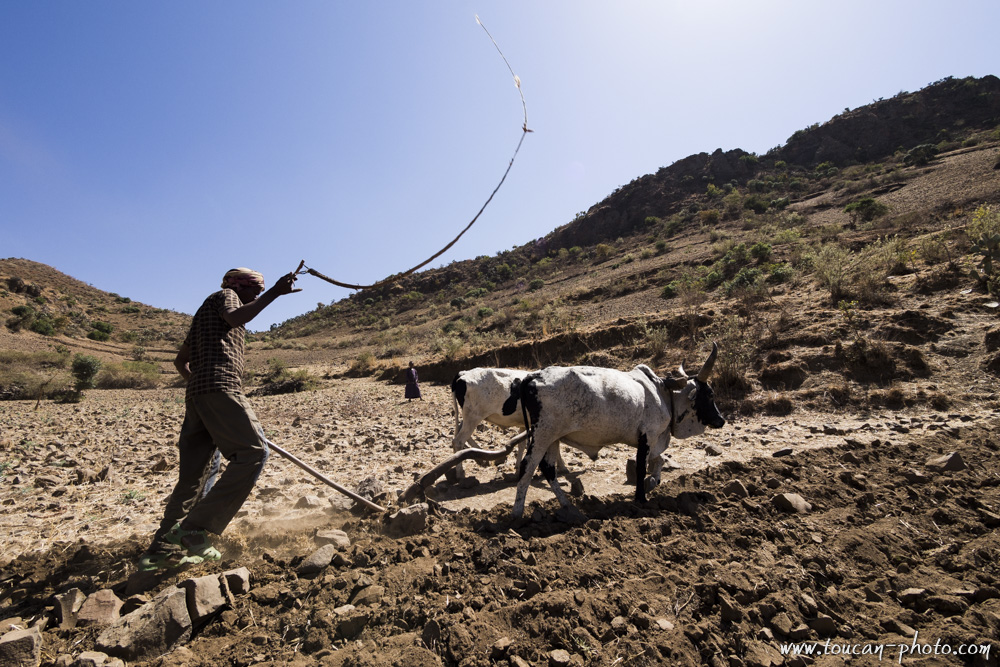
Compared to the surrounding area the weather is more cool and wet because of the highlands altitude. Consequently, it is more easy to grow crops, and the most of the Simien inhabitants are farmers. It is also possible to produce coffee beans.

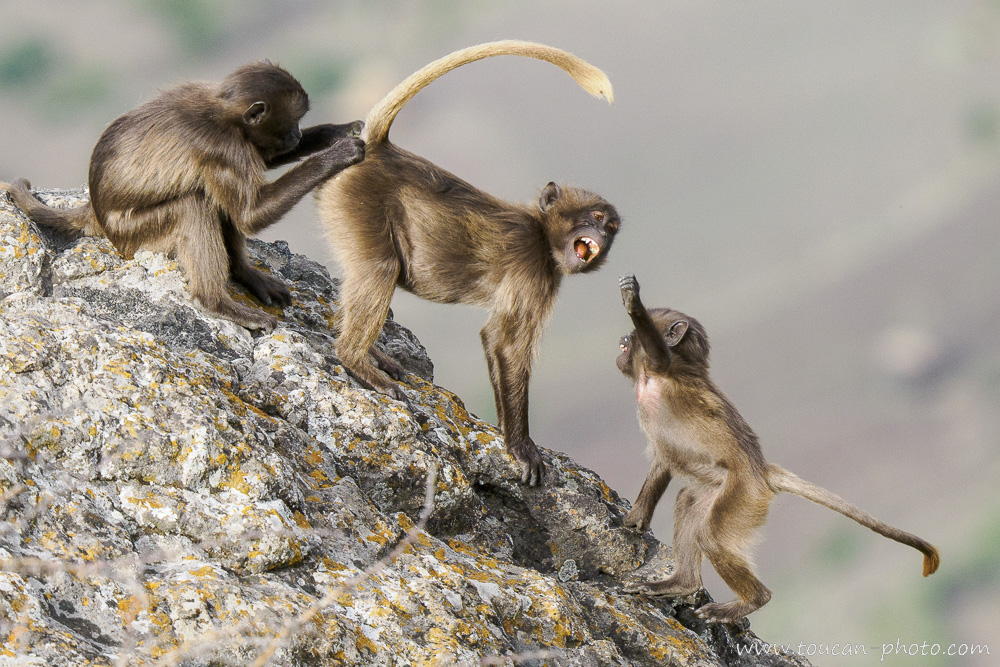
The Simien Mountain is home of number of endangered species, including the Ethiopian Wolf (Only 500 wolves live in the wild). More common, the gelada baboon is easy to get encountered within the Simien Mountains.

Continue reading“Ethiopia: The Simien Mountains”

?>